WTC1 Inward Bowing of the North Face
Observations by "MrKoenig" as follows:
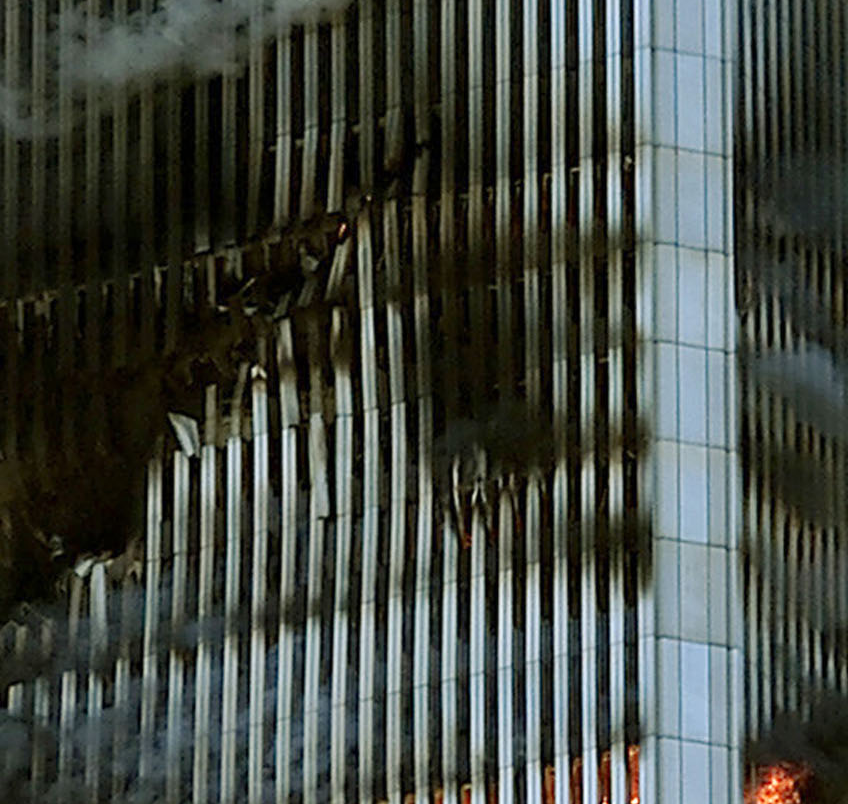
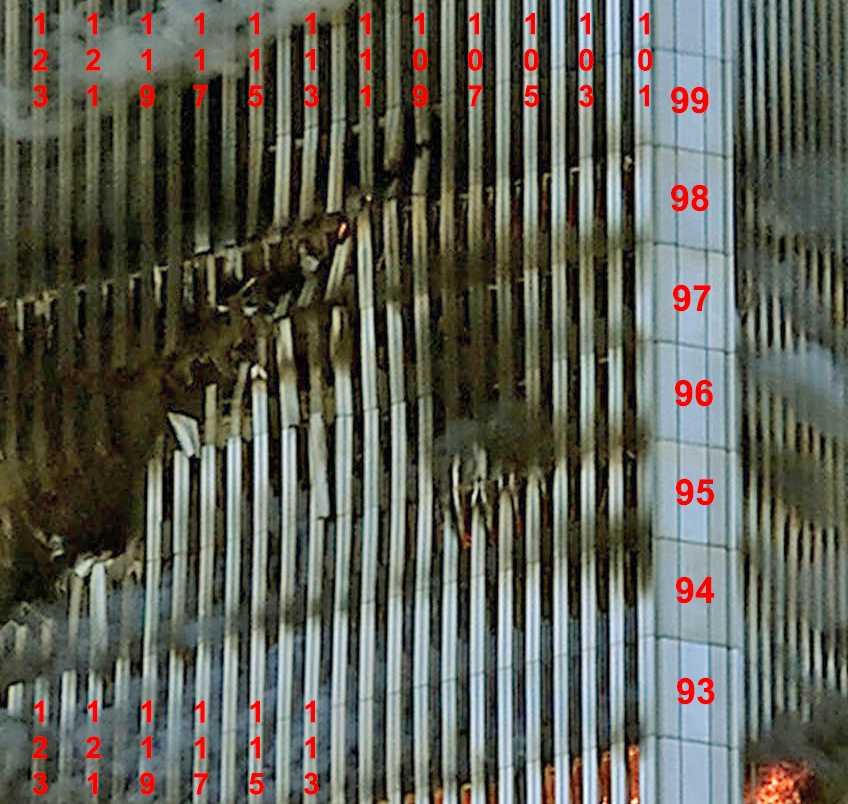
Hi-res photo shot by José Jiménez(-Tirado) of Primera Hora, reveals inward bowing of some non-severed perimeter columns at WTC 1 north face, just west of the impact hole.
Original, as-downloaded photograph:
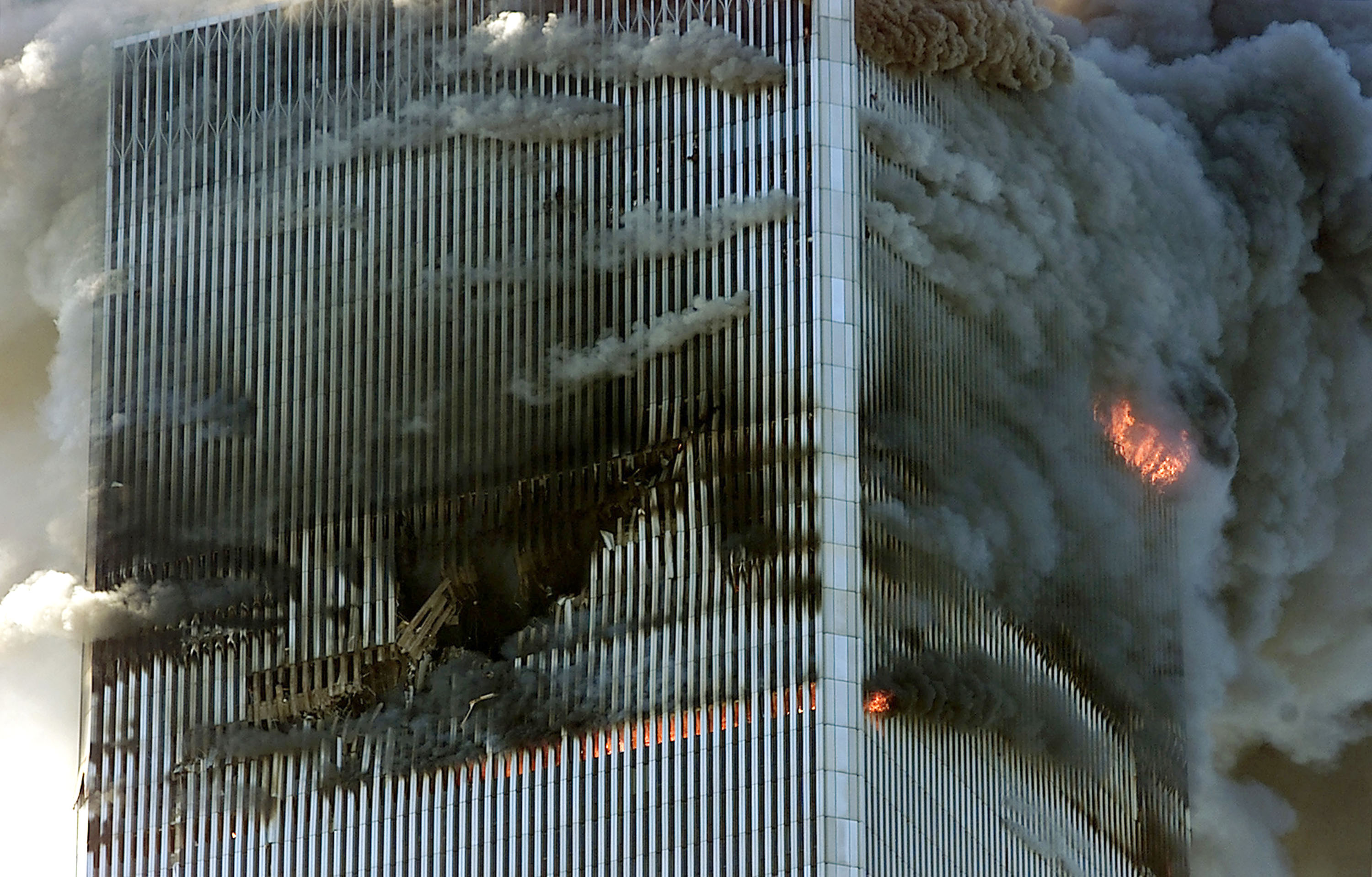
Download source: http://jackontheweb.cbslocal.com/photogalleries/2012/09/10/remembering-911-a-look-back-at-the-september-11th-attacks
Cropped to the area of interest:
Cropped & marked-up:
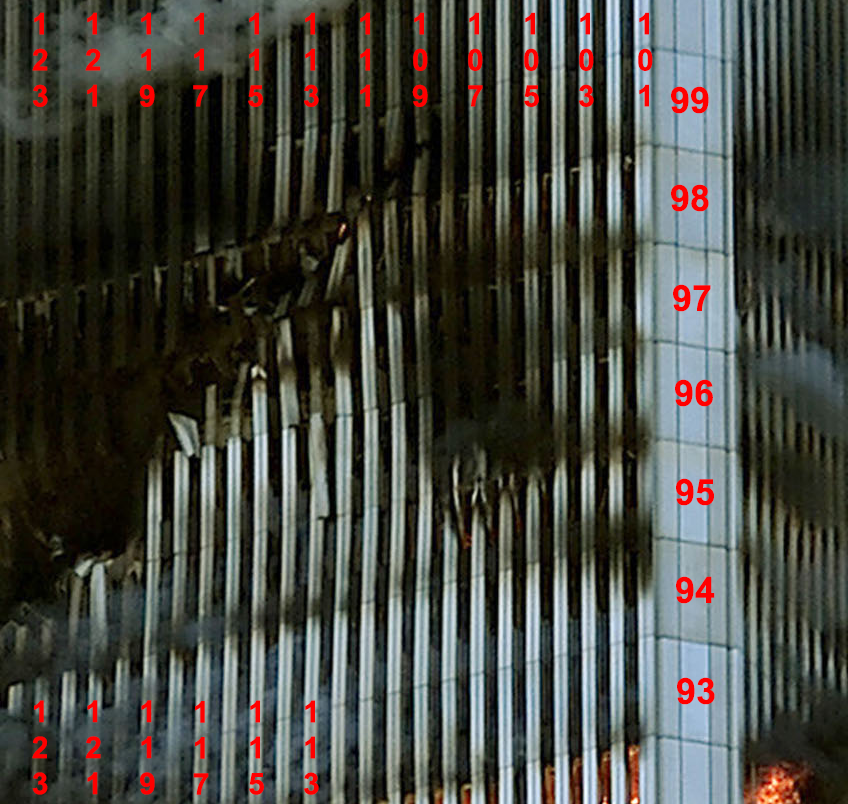
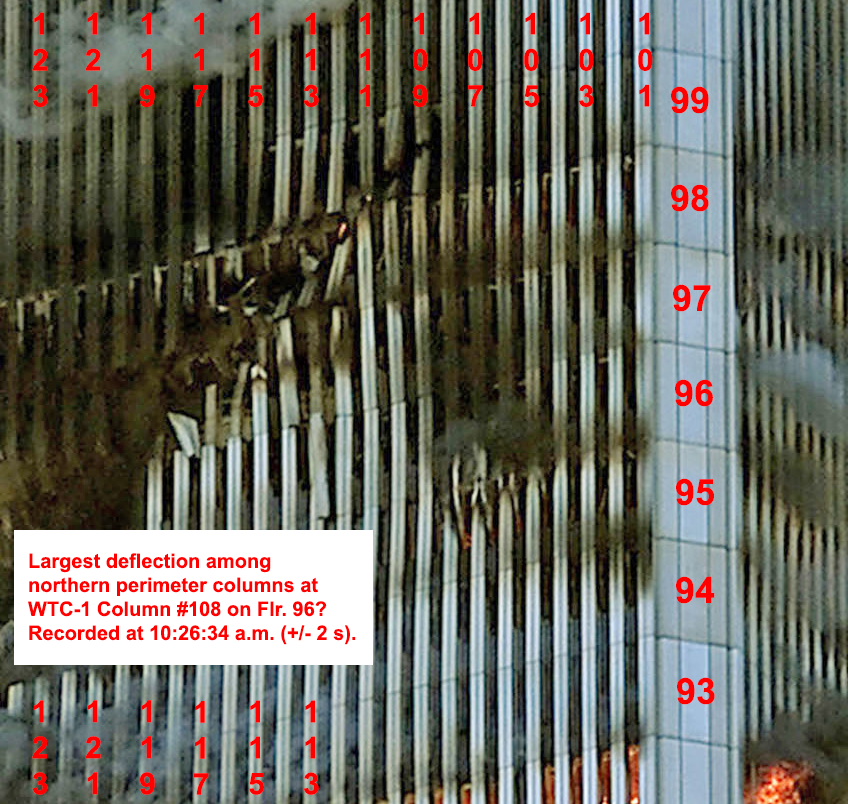
Column numbering is based on the architectural drawing "A-A-152", "96th to 100th Floor Plan", WTC 1.
The lowest floor with visible fire is actually the 92nd floor. The growth and spread of the major fire on the western part of that floor was contributed by a "pressure pulse" (NIST) happened on lower impact floors at ~10:18:48 a.m. For the NIST analysis of it click here. This event has been also somewhat discussed on this forum, click here.
It's unknown, if the cause of that "pressure pulse" is in some way related to the inward bowing of the several northern (and more southern) perimeter columns of WTC 1.
Looks like as if the inward bowing of northern perimeter columns (105-114?) extends from floor 94 through 98.
Photo needs to be timed with an available NIST Cumulus video clip or photo with NIST-assigned time for it (adding 5 seconds to it in order to match NIST's refined time, as used in their final reports).
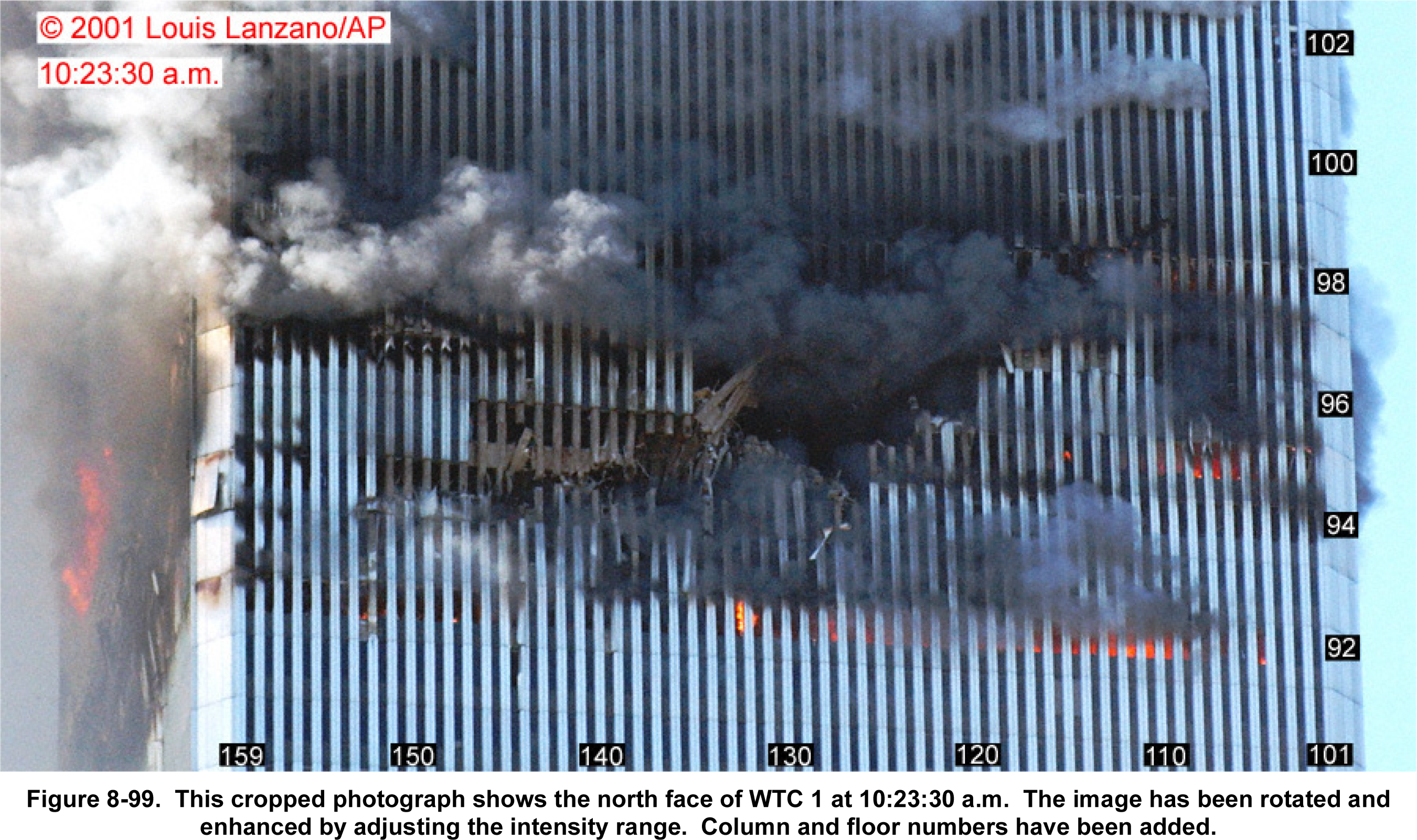
Based on the fire spread on floors 92, 95 and 104, and by comparing it to NIST-timed photos of Greg Semendinger (west face at ~10:22:59am), Louis Lanzano (north face at ~10:23:30am) and Lyle Owerko (north face at ~10:28:06am), the Jimenez photo above was likely recorded at 10:27am to 10:28am.
Seems to be that this pre-collapse feature got unnoticed by NIST. Can't find anything about it in their relevant final reports on WTC towers, NIST NCSTAR 1-3C (metallurgical analysis), NIST NCSTAR 1-5A (imagery analysis) and NIST NCSTAR 1-6 (structural analysis), including the appendixes.
This inward bowing is also slightly apparent on that Louis Lanzano photo, shot at ~10:23:30am, and as reproduced in Figure 8-99 of the final NIST NCSTAR 1-5A (Sep. 2005), Chapters 1-8, p. 259 / PDF p. 355, and linked already above.
The photo below was taken by David Karp/AP, few minutes before that large "pressure pulse" occured within WTC 1 at 10:18:48am.
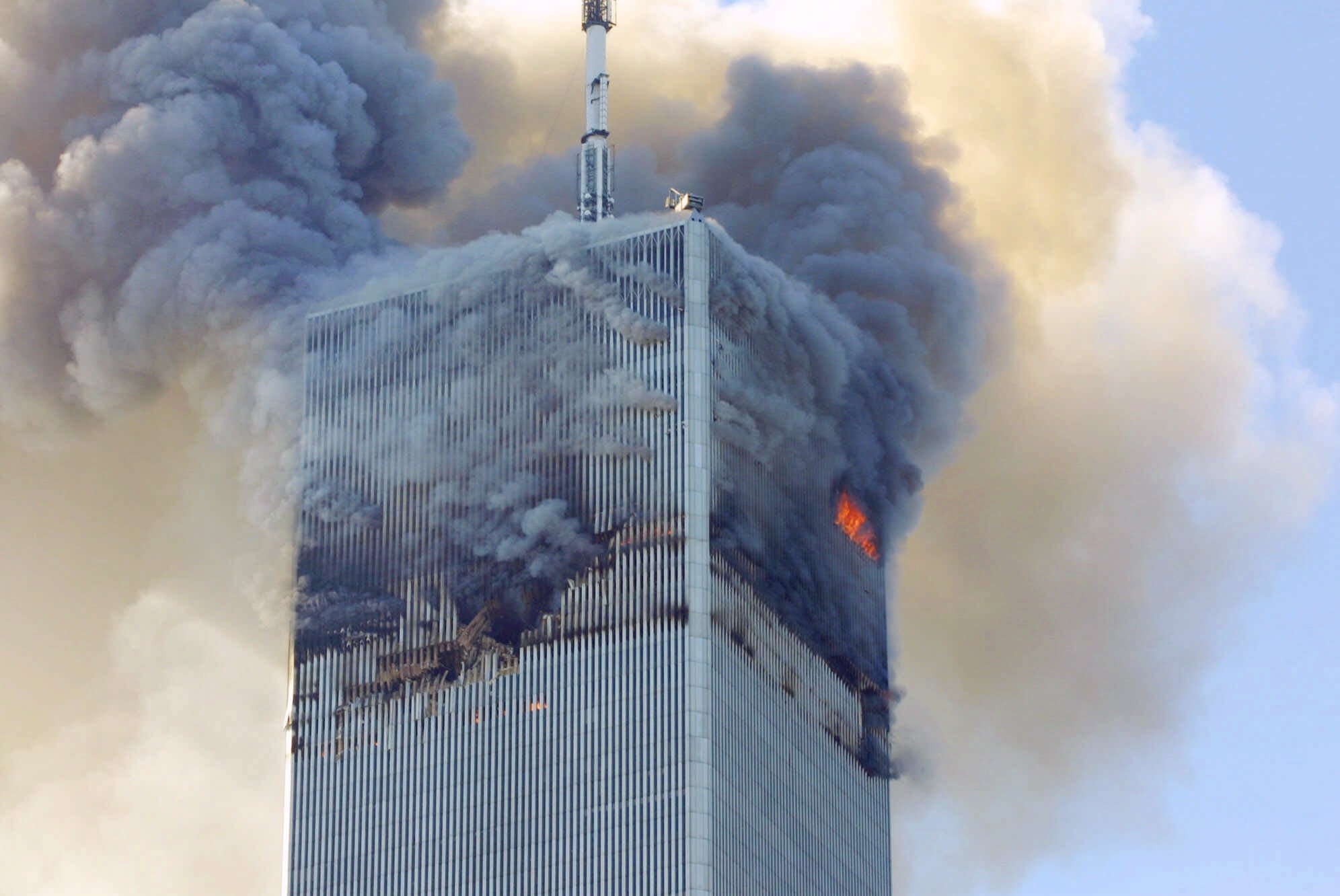
No inward bowing of the north face columns is observable. The northern perimeter columns 105-114 appear all straight between floors 94 and 98.
The same photo was reproduced in Figure 8-84 of NIST NCSTAR 1-5A, Chapters 1-8 (Sep. 2005), p. 240 / PDF p. 336. NIST did assign the recording time as 10:15:10 a.m.
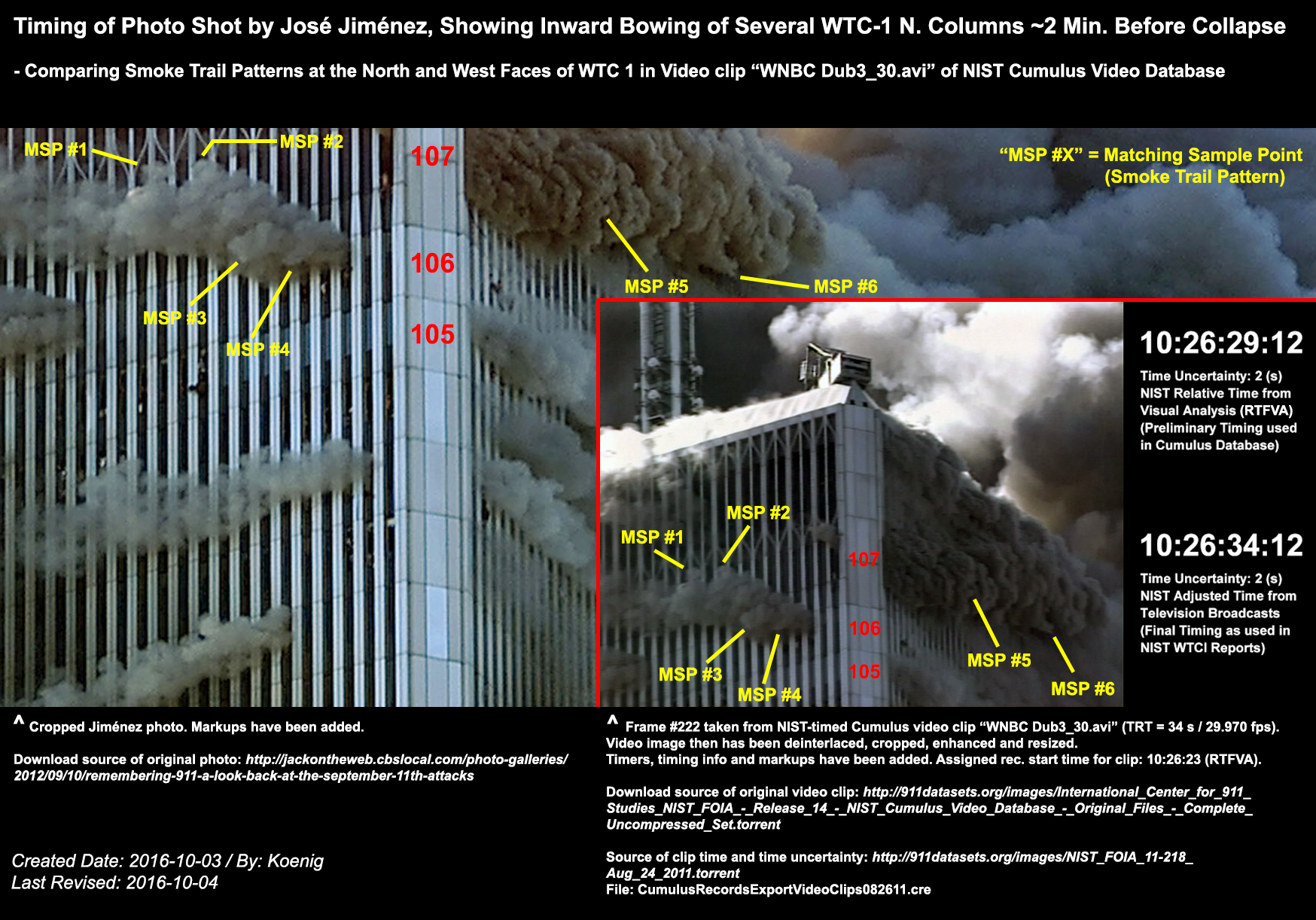
The Jiménez photo above was recorded at ~10:26:34 a.m. (+/- 2 sec.).
Matches in the smoke trail pattern have been found in NIST-timed Cumulus clip "WNBC Dub3_30.avi" (TRT: 34 s / NIST's recording start time: 10:26:23 / time uncertainty: 2 s / NIST's preliminary "Relative Time from Visual Analysis"). 5 additional seconds have been added in order to match NIST's refined "Adjusted Time from Television Broadcasts". See the timing chart below with further details.
Enhanced photo excerpt to highlight the darkened, sooty/smoky area at the bowed columns:
So, IB doesn't form in this location for more than 1 hour after plane impact but forms within a few minutes after the 10:18 pressure pulse.
The largest inward deflection appears to be at column #108 near the 96th floor spandrel.
Just immediately following that significant pressure change at 10:18:48 a.m., five people were observed falling along the WTC-1 north face within ~1 minute after the event.
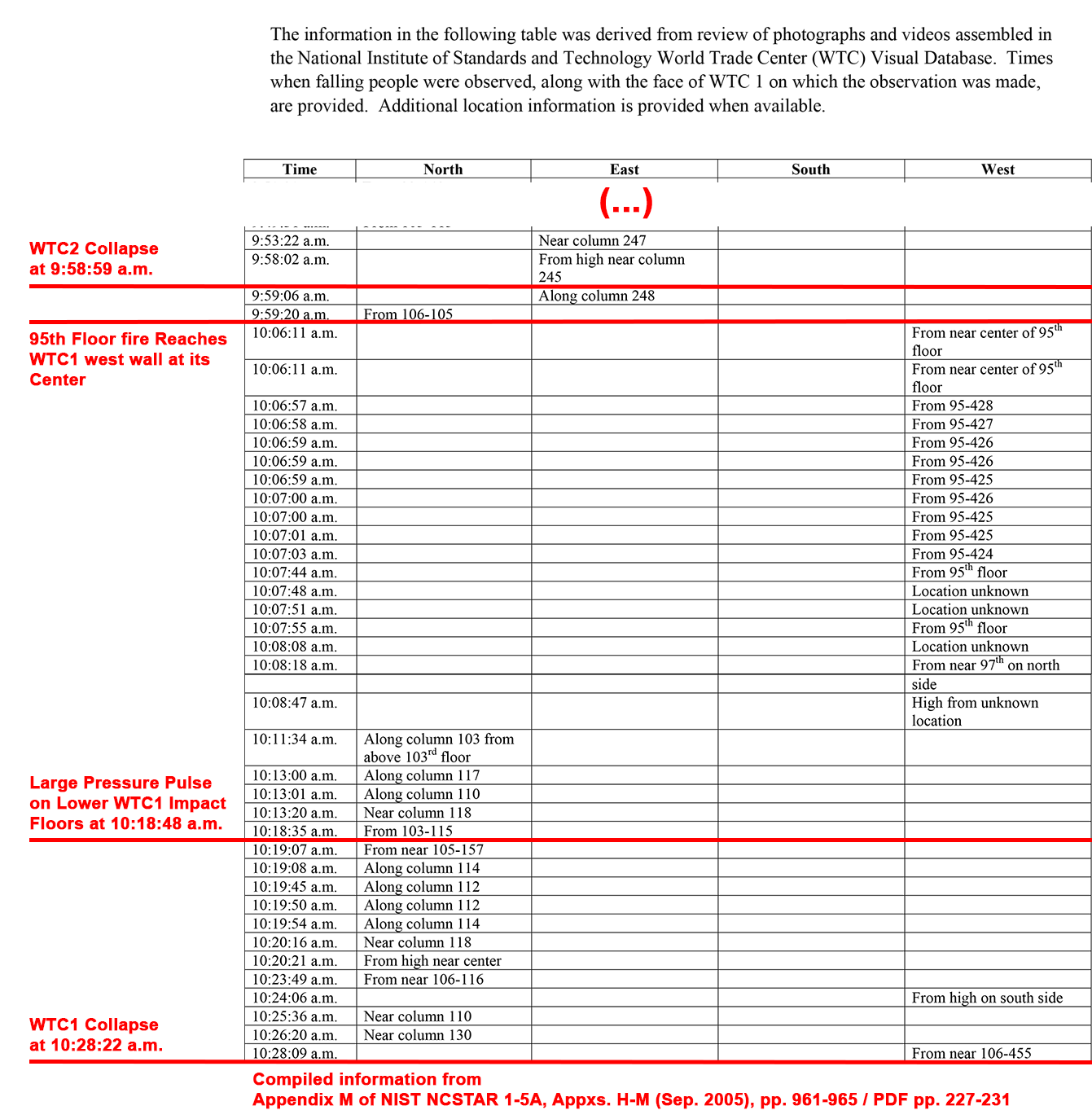
Note also the perimeter columns at which the 4 of 5 jumpers were observed falling by NIST at 10:19 a.m. - all were located either within or very near to the inward bowing area at north face. That and the suddenly increased number of falling people could indicate structural changes within the tower just after the pressure pulse.